

Two Shores Capital

UK capital · Nigeria · Ghana · Kenya

Real African businesses. Verified numbers. Income you can trace.

Two Shores Capital connects UK-based diaspora investors with profitable small businesses in Nigeria, Ghana and Kenya — FMCG distributors, food processors and export traders — through short-cycle working-capital deals underwritten from 12 months of bank statements and verified on the ground.

An African business owner in her distribution warehouse
Every deal begins with the accounts — and a site visit.
$57bn+ combined MSME finance gap across Nigeria, Ghana and Kenya1,4,6
1 in 20 Nigerian small businesses can access bank credit2
74% of Ghanaian MSMEs partly or fully credit-constrained4
12 months of statements analysed before a single pound moves
The London skyline across the Thames at dusk

For investors

Income-style returns from businesses you can visit

You already send money home. Two Shores directs it into verified, profitable businesses — with the evidence in your hands before you commit.

  • Plain-English deal memo: the business, verified financials, security, terms, risks
  • Bank-statement underwriting and a 12-point red-flag screen on every deal
  • Monthly reporting on repayments and performance
  • Participation through a properly structured SPV — never informal pooling
Discuss an investment
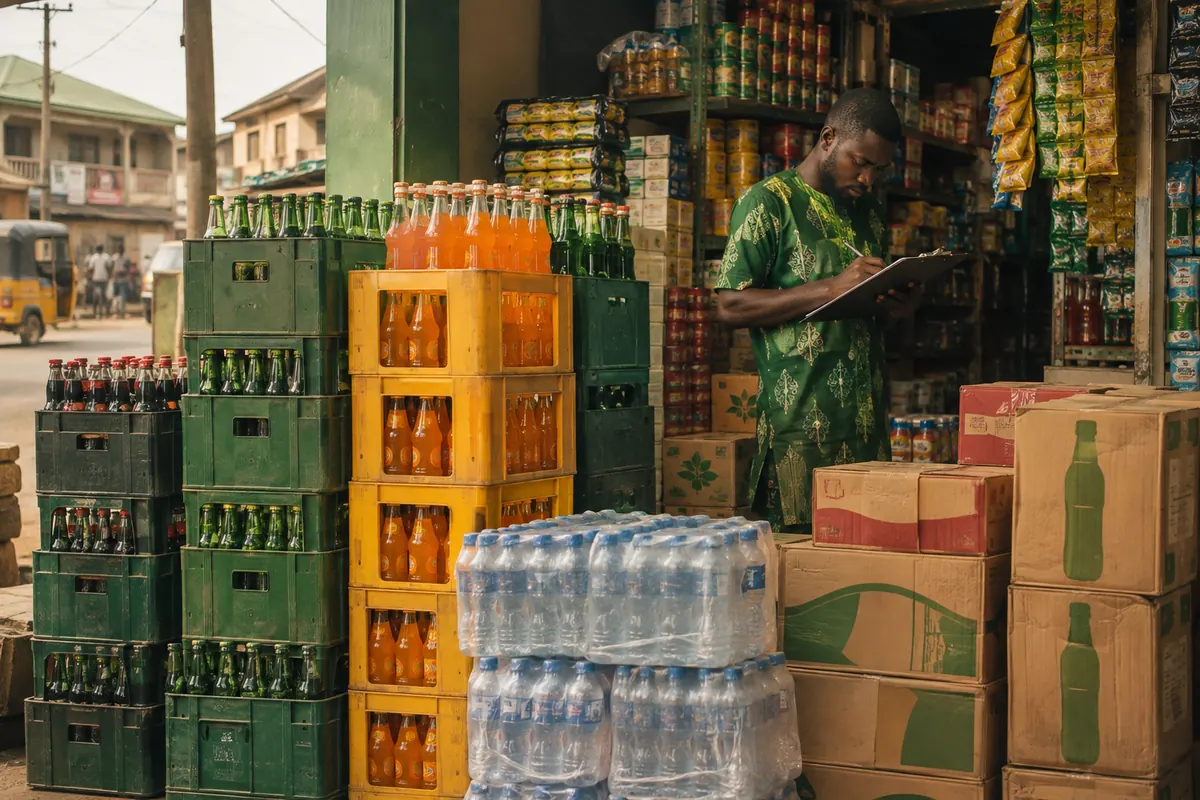
A stocked FMCG distribution shop

For SMEs in Nigeria, Ghana & Kenya

Working capital without the collateral wall

If your business trades profitably but the bank wants collateral you don't have, we finance stock, orders and equipment against your verified cashflow.

  • Stock finance of roughly £15k–£60k in local currency, repaid as the stock sells
  • Purchase-order finance for confirmed orders — ideal for exporters
  • Equipment and vehicle finance with the asset as security
  • Fast decisions from bank and mobile-money statements you already have
Apply for finance

Where we invest

Three markets. One underwriting standard.

Nigeria, Ghana and Kenya each have large diaspora communities in the UK, deep trading economies, and profitable businesses that banks still won't lend to. Every deal in every market goes through the same six steps and the same red-flag screen.

NG

Nigeria

Lagos · Abuja · Kano

MSME finance gap
$32bn1
Bank lending rates
32–40%3
Typical facility
₦27m–₦108m

Focus: FMCG distributors, food processors, export traders.

GH

Ghana

Accra · Kumasi · Tema

MSME finance gap
$6.1bn4
Avg. bank lending rate
15.8%5
Typical facility
GH₵230k–GH₵930k

Focus: agro-processors (cocoa, shea, cassava), FMCG distributors, importers through Tema port.

KE

Kenya

Nairobi · Mombasa · Nakuru

MSME finance gap
$19.3bn6
Avg. bank lending rate
14.4%7
Typical facility
KSh2.5m–KSh10m

Focus: FMCG distributors, agri-processors (tea, dairy, horticulture), logistics operators.

Headline bank rates are averages. SMEs without collateral are often charged far more, or refused outright. That gap is where verified working capital earns its return.

Third Mainland Bridge over the Lagos lagoon at dusk
Two shores, one bridge: capital that leaves London as an investment and arrives in Lagos, Accra and Nairobi as inventory, equipment and wages.

The method

Six steps. Every deal. No exceptions.

  1. 01

    Source

    Deal flow from trade associations, manufacturer distributor networks, export bodies and referrals — filtered to businesses trading three years or more.

  2. 02

    Verify

    Twelve months of bank and mobile-money statements (including M-Pesa and MoMo) from every account, reconstructed line by line into true revenue, cashflow and working-capital needs.

  3. 03

    Visit

    On-the-ground due diligence in each market: site visits, stock counts, counterparty calls. Numbers can be dressed; a warehouse cannot.

  4. 04

    Structure

    Short-cycle instruments — stock finance, purchase-order finance, revenue-share loans — sized against verified cashflow, secured against assets.

  5. 05

    Fund

    Investors participate through a structured SPV with full legal documentation. Capital is deployed against the plan — nothing else.

  6. 06

    Service

    Monthly investor reporting, repayment monitoring, and reinvestment as capital recycles — typically within months, not years.

The edge

Most channels sell stories. We sell verified numbers.

Every deal is underwritten with a proprietary model that categorises every bank transaction, tests revenue claims against statement evidence, and sizes the facility against what the cashflow can actually carry.

  • Round-number and staged-deposit detection
  • Owner drawings stripped out and normalised
  • Customer and supplier concentration testing
  • Window-dressing checks on pre-application months
  • Debt-service coverage sized conservatively
  • Currency stress-testing against naira, cedi and shilling depreciation

The analyst behind the deals

Underwritten personally, by name

Two Shores Capital is run by Joshua Adekeye — a CFA-certified strategic finance consultant with over ten years of experience across UK public and private sector organisations, from the Care Quality Commission to Somerset Council and Lifeways Group.

£2.1m overspend identified for a UK public body
£2.3m aged debt resolved at a major care group
40% increase in medium-term savings, zero-based budgeting
50% faster board-level reporting delivered for CQC

Trusted by: Lifeways Group · G4S · Castle Point Borough Council · Leigh Day · Kirkland & Ellis LLP · University of Greenwich · Somerset Council · Cumberland Council · Care Quality Commission

Questions

Before you ask

What returns can investors expect?

Deals are priced individually and presented in a deal memo before any commitment. Returns are quoted in local-currency terms (naira, cedi or shilling) and stress-tested against currency depreciation; nothing on this site is a promise of return.

Who can invest?

Investment opportunities are available only to investors who qualify under UK financial promotion rules as certified high-net-worth or sophisticated investors. A short self-certification conversation precedes any deal discussion.

What businesses qualify for finance?

Profitable businesses in Nigeria, Ghana or Kenya trading three years or more — typically FMCG distributors, food processors and export traders — with 12 months of bank (or mobile-money) statements and a clear use of funds such as stock, a confirmed order or equipment.

How is my money protected?

Facilities are sized conservatively against verified cashflow and secured against assets where the deal type allows — stock, equipment or invoices. Security is registered with proper legal documentation through local counsel in the relevant country.

What happens if a business can't repay?

Every deal carries a debt-service coverage buffer and, where possible, security. Recovery follows the legal documentation. Diversification across deals — never a single concentration — is how the portfolio absorbs a bad outcome.

Let's talk

Investors: bring your questions — we'll walk through the underwriting before you see a single deal. Businesses: send your basics and we'll tell you quickly whether you fit the model.

Start a conversation

Tell us who you are and what you're looking for. You'll hear back within two working days.

Email Two Shores Capital